









Grullo or Grulla
Explained in as simple of terms as possible!
April, 2018: Much of this page is very old, and needs to be updated. Some of the info is outdated, but it is still a good reference for the most part. I'll try to update it soon!
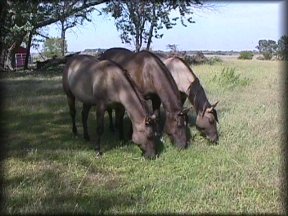
Three different shades of grulla, sunbleached (late summer)
|
[Definition] [Finding a Grullo] [Silver Grullo] [Foal Colors] [Grullo Links] [Genetics] [Request Color Help]
Grullo (pronounced "grew' yo" or "grew' ya") is a fairly-rare color still for AQHA horses, even though there are many breeders specifically breeding for the color.
What is a Grullo?
Simplest terms: A grullo is a black horse with the dun gene. Grullos range in color from light silvery-white to dark chocolate brown, and some almost look black.
Grullos MUST have the following characteristics:
-
Black or brown legs
-
The head will be darker than the body
-
Dark tips on the ears
-
A very DISTINCT dorsal stripe that runs fully from the base of the mane and into the tail
Grullos will often have other characteristics such as:
-
Stripes on the legs (leg bars)
-
Mottling on the upper legs, shoulders, gaskins
-
Dark rings around the ears
-
Striping on the forehead (cobwebbing)
-
Stripes crossing the back, shoulders, or neck
Grullo is the result of the dun factor "gene" on a black horse. Grullo (used here for both masculine, and the feminine "grulla") is to black as dun is to bay, and as red dun is to sorrel. They are just the colors that result when the dun factor is applied to the base coat colors. This dun gene acts similarly to the creme gene in that it dilutes the base color, but not quite the same. The following table shows what color results from three base horse coat colors when the dun or creme genes are passed by a parent to an offspring. Back to Top
| Base Color | Base Color plus Dun Gene (always has a dorsal stripe) | Base Color plus Creme Gene |
| Sorrel | Red Dun | Palomino |
| Bay | Dun | Buckskin |
| Black | Grullo | Smoky black (brownish) |
Combinations of the above colors, and others, exist. For example, see Baileys Badland Buck, a palomino red dun (dunalino). She carries both the creme and the dun genes on a base sorrel color. Our late stallion, Blue Yahooty Hancock, is a base color black with the dun gene (making him grullo) AND the roan gene (making him a blue roan). Most of the year, he looks grullo, but for a couple months of the year he is a blue roan with a dorsal stripe. The same is true with Crowheart WYO Boy.
How Can I Get a Grullo?
-
Buy One. Your best bet is to buy one from a reputable breeder who specializes in grullos (like us) if you want a foal, or to buy a mature grullo whose color is easy to determine. Non-grullo specialists (breeders) often "think" they have a grullo foal, but the buyer ends up with a dun, gray, or a black in many cases.
-
Make One. The other way is to try to breed for one. There are few guarantees on this route, but with genetic testing, some people have been able to match up stallions and mares to produce grullo foals 100% of the time.
To have a grullo foal, the best bet is to breed two grullos, or even to breed a black to a grullo. The chance of having a grullo foal from two grullo parents has averaged less than 50% in some studies, but can be 100% in certain circumstances (with certain homozygosities). This varies, depending upon whether the dun factor and/or the black gene (lack of red factor) are homozygous in the sire and/or the dam, however.
[Definition] [Finding a Grullo] [Silver Grullo] [Foal Colors] [Grullo Links] [Genetics] [Request Color Help]
The Elusive Silver Grullo
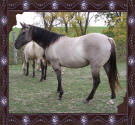
Many people are looking for a silvery-colored grulla, and many breeders claim to have them.
If you are looking for a silvery grulla foal, educate yourself.
If you see a newborn foal that is silver-colored, you can very often get a resulting horse that is black, a dark slate or medium slate grulla (or even a gray that will turn white and not even be a grulla at all!) at maturity. Silvery grulla foals are usually born a VERY light buff/cream color, and not a light gray color. There are exceptions, but in general, this is true.
True silvery grullas may have blue-gray eyes according to some sources, but this is generally true only in the foal's early life. This is because one (outdated) definition of a silver grullo is a "grullo that also carries a creme gene." The creme gene usually gives the foal blue eyes at birth, but does NOT guarantee the coat color will be light silver in shade.
Buy cautiously if you are trying to buy a silvery grulla as a foal. Many breeders advertise "silver grulla foals" who later shed out black or dark grulla. Your best bet is to visit the farm and look at the under-color of the foal coat, or at the back of the foal's buttocks where it has begun to shed. Even at that, grullas change so much in their first few years that luck will have to be considered a factor. The only sure way to buy a silvery grulla is to buy a mature horse that is silver!
Smokey Grullo and Silver Grullo
Keep in mind that terminology is changing. Until about 2005, the term "silver grullo" was used to describe a silvery-colored grullo (light silvery body color) most of the time. Some people used it to describe any grullo that also carried a cream gene (smokey grullo), whether light/silver shade or dark grullo shaded.
In recent years, "silver grullo" has been used for a grullo that also carries a silver dapple gene. I think that in the future, "silver grullo" will be most correct for grullo + silver dapple horses, and "smokey grullo" will be for grullos with cream genes.
It might be a compromise temporarily to call a light-colored grullo a "silvery grullo" (with the y on the end of silver). Maybe people will begin calling them "light grullos." At this point, it's hard to guess.
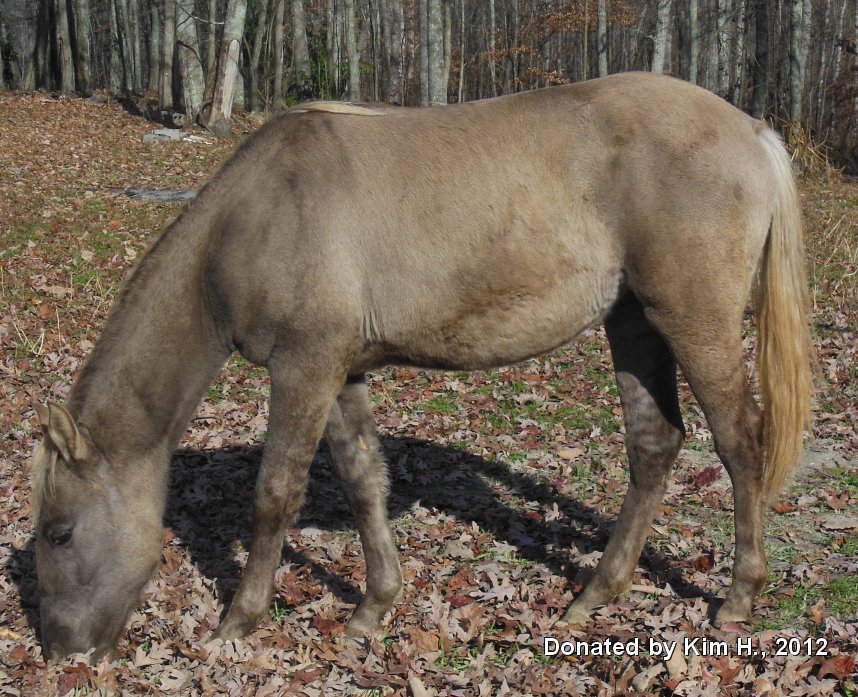
A "true" silver grullo: Silver Dapple + Grullo
(aka silver black dun and various other terms)
Note the light mane and tail, which are caused by the silver dapple (aka Taffy)
gene.
Examples of Foal Coat Colors
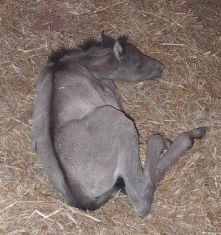
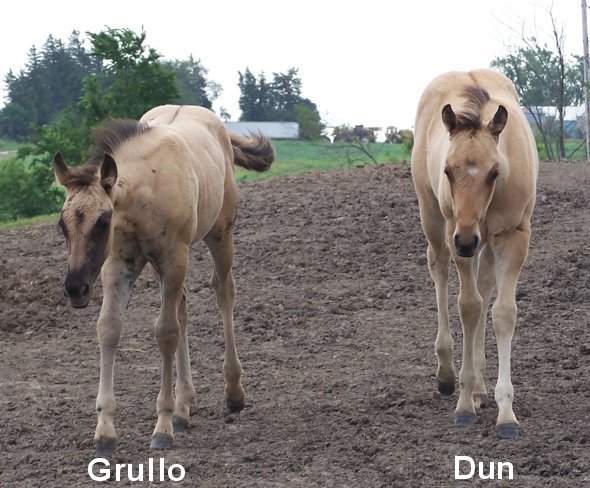
Grullo foals are often mistaken for dun foals, and even long-time breeders can be fooled. Grullo foals have even been born red dun, only to shed out grullo within the first year. Many black foals have been called grulla, only to shed off black around the age of 4 months. We hope buyers will beware of buying such foals...how disappointing to pay a premium price for a grulla, only to find they have a black later in the year.
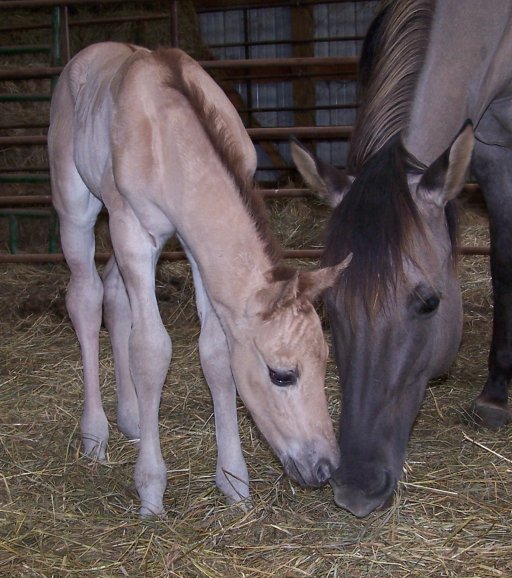
Generally, grullo foals are born a light tan color with a distinct dorsal stripe.
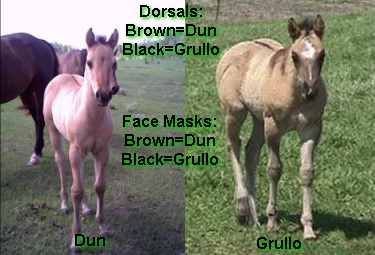
To tell the difference between a grullo foal and a dun foal, look at the face. Usually, a grullo foal will have black hair around the eyeballs and a black or gray mask of hair across the face/bridge of the nose. A dun foal will have golden, orange, or brown hair in those two places. Also, grullos will often have black dorsal stripes, while dun foals will often have dark brown or dark red dorsal stripes. Still, this doesn't always hold true! Other grullo foal colors...click here
Grullo Foals
| This filly was born silvery and turned into a medium slate. |
|
| This filly was born cream/light buff, and looks pretty silvery/light now as an adult. She had dark blue eyes (at 3 months), instead of brown eyes, which is an indication that she probably carries the creme gene as well as the dun factor. |
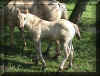 21 days old |
| This filly shed off with a black head and legs, and was a blue grullo base color plus the roan gene. You can see why some people would have called her a dun, based upon her foal hair color. |
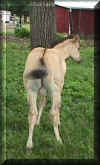
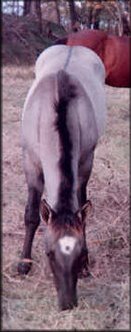 Left, 2 months. Right, 6 months |
| This filly was a unique color. She shed off a beautiful silvery/light color. Her parents' colors were inconclusive...a red dun and a dun (possible dunskin). Thanks for the pictures, Kristi! :-) |
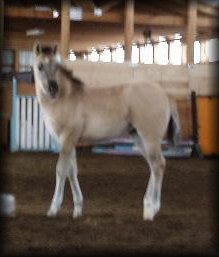

Left, foal coat. Right, yearling. |
| This filly shed off with a medium slate grulla coat which later roaned. Note the black nose, eye hair, and face mask on her baby picture. |
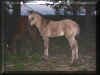 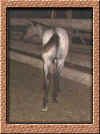 Left, 1 month. Right, 4 months. |
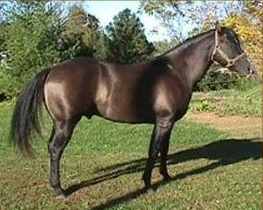
| Born silver grullo, this colt changed to a dark slate grullo at maturity. In the winter, he's a rich, dark charcoal color that's almost black. He might be a lobo dun (dark grullo). |
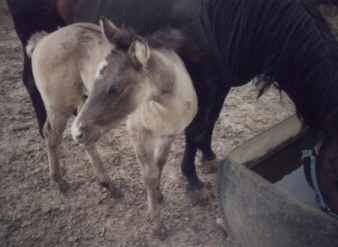
 |
| A bluish-gray eye is characteristic of a dun-factored horse that is also carrying the creme dilution, from my experience. Often (but not always), these creme carrying grullos will be silver. NOTE: Blue eyes are NOT necessarily a characteristic of the dun gene or of grullos in general. Grayish blue eyes are most likely due to the creme dilution, which is most commonly known for causing buckskins and palominos, and which sometimes appears along with the dun gene, depending upon the ancestors of a horse in question. There are other modifiers that can cause lighter-colored eyes as well. |
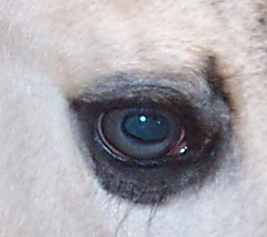 Creme-carrying silver grullo foal eye color Click for larger view |
| THIS IS VERY RARE...do not assume that your red dun
foal will turn out to be grullo. I shouldn't even put this on
here, but it is an example of what can happen with colors, and how
hard they are to predict. After having had 50 to 100 grullo
foals (I haven't counted), I wouldn't feel badly at all if I was
wrong about guessing a foal's color being grullo. They can be
tricky! ;-) This filly was born looking like a red dun, but had black roots to her mane and tail, black skin around her eyes, dark charcoal-colored hooves, and had 2 grullo parents. She grew up to be silvery (light) grullo. The last/bottom foal is another example of a grullo that looked red dun-ish at birth, but had dark skin instead of peachy skin. It also matured to a light grullo color, like its dam. |

  |
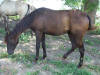
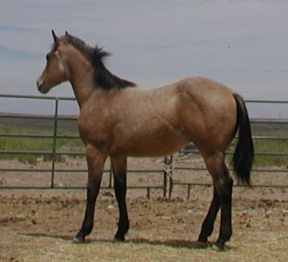
Non-Grullo Horses





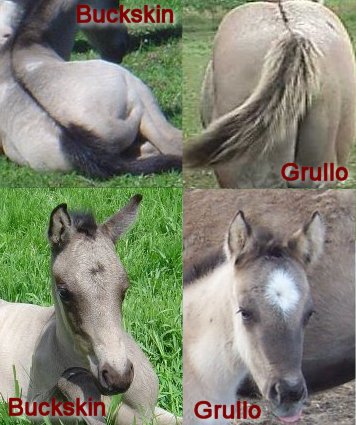
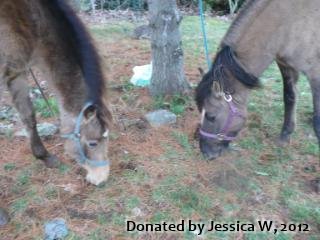
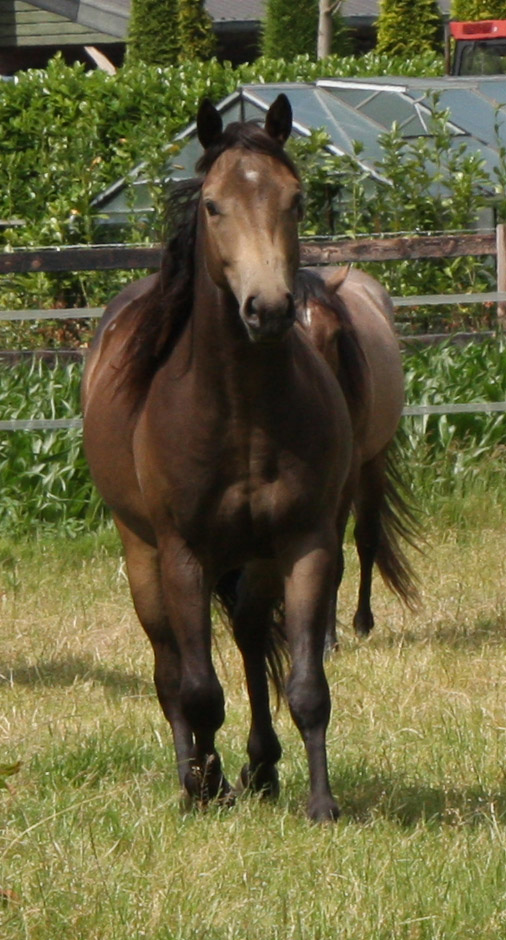
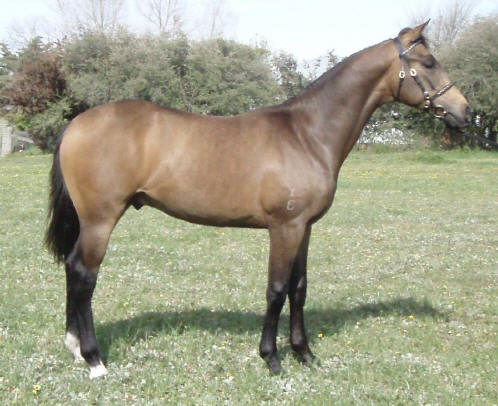
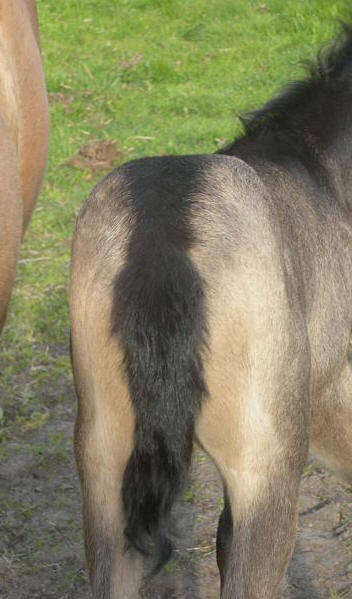
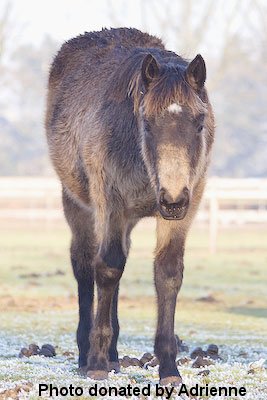
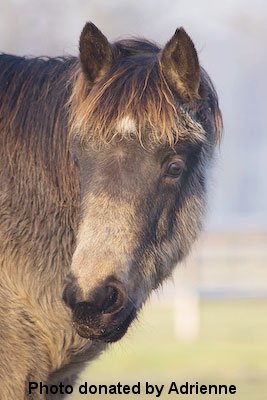
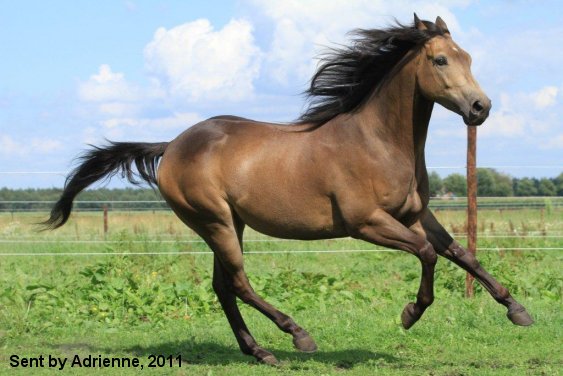
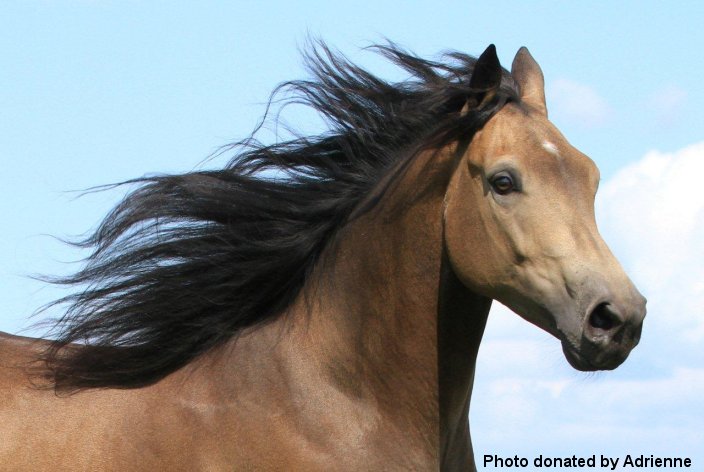
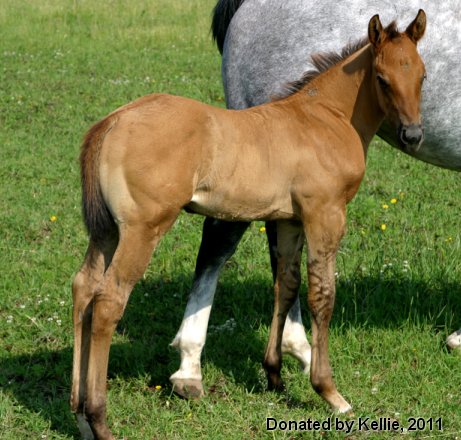

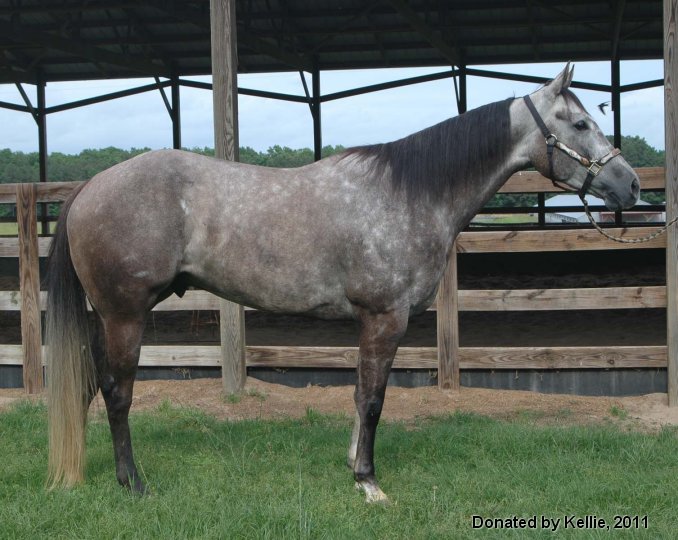
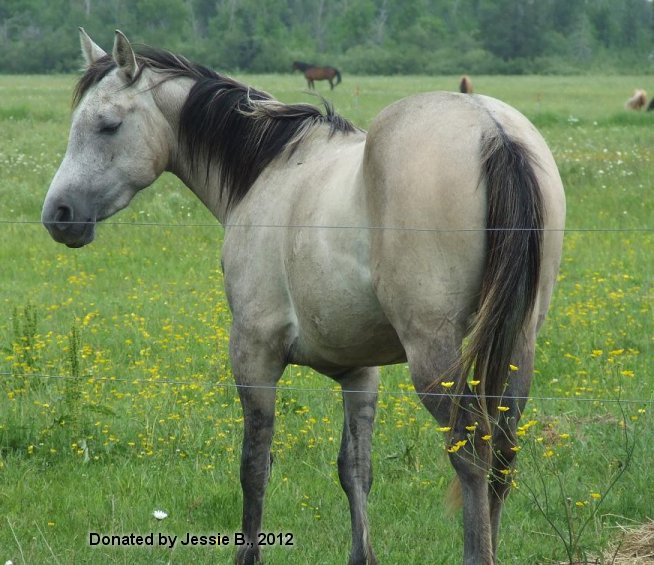
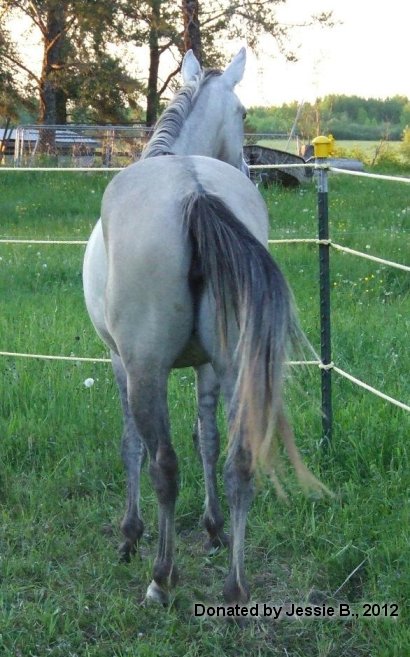
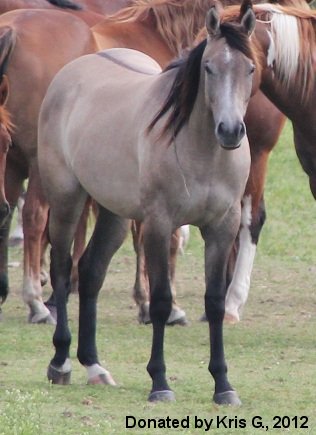
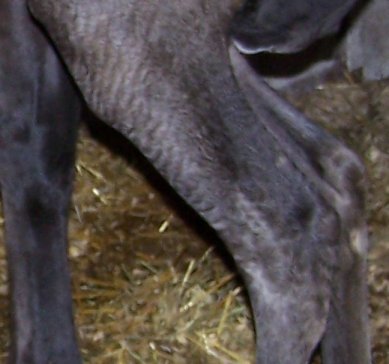
What color is YOUR foal?
The most common mistake people who contact me
make
is in
trying to get others to believe
that their foal or horse is the color
they WANT him to be.
Many, many people have asked me over the past few years what color their foals were, and then have refused to accept my opinion because they so badly wanted their foal to be a different color. As you try to figure out your foal's color, leave your personal preference out of it....go by the facts first. Hopefully, you'll be pleased in the end! But if not (for example, if you wanted him to be a grulla and he turns out to be a sooty buckskin), take comfort in the fact that you know the truth and can educate others about the differences between similar colors.
[Definition] [Finding a Grullo] [Silver Grullo] [Foal Colors] [Grullo Links] [Genetics] [Request Color Help]
To learn more about grullo and dun colors:
Click here to request help determining your horse or foal's color
More about grullo genetics! This page is about the genetics of grulla, and is more in-depth than this page, but still not full of letters with superscripts and language that is hard to read. I tried to make this simple, and yet accurate! Grullo Genetics Info
Test your foal or horse...how to be SURE of his/her genetics!
Dun Factor Traits....photos and explanations can be seen here.
-
Check out http://www.animalgenetics.us/CCalculator1.asp, which is a calculator that will help predict foal color opportunities.
-
Variations of buckskins Visit http://tenderquarterhorses.tripod.com/tqh_020.htm to learn about sootiness/smuttiness and countershading.
-
He has a dorsal stripe, but neither of his parents did IMPORTANT LINKS. This one talks about markings that are similar to dun dorsal stripes, but not the same. These markings are responsible for a lot of horses being called dun or grulla who really are not. Visit http://tenderquarterhorses.tripod.com/tqh_020.htm to learn about sootiness/smuttiness and countershading.
Click here to request help determining your horse or foal's color
[Definition] [Finding a Grullo] [Silver Grullo] [Foal Colors] [Grullo Links] [Genetics] [Request Color Help] [Top]
How To Donate Your Educational Photo:
-
If you are wondering what color your foal is, click here. We are having a lot of people send us pictures for this page where it is obvious that the foal owners don't know what color their foal is. Please, only send us photos for this page if you know your foal's color. If you don't know what color your foal is, click here.
-
If you foal is a Paint or Appaloosa, we will only use it if the vast majority of the foal's body is not included in the white patterned areas, as this page is intended to help people determine foal colors, so the colored hairs must be very obvious.
-
This is an educational page, and photos should show a safe environment and healthy horses. I don't even know how to respond when I receive photos of wormy, skinny horses in pastures littered with abandoned cars, farm equipment, wire fences laying on the ground, and falling-down buildings. I simply can't put photos like that on an educational page like this, where people come to learn.
-
Please note that this is not intended to be a free opportunity for you to advertise your breeding operation, and instead is an educational page. We will not use photos with watermarks/writing on them. There are many free advertising sites on the Internet at which you can advertise your farm/ranch/horses. Also, only send photos of foals you own. This way, there won't be copyright problems.

Feel free to click the "Send Your Photo" logo
at the left to send a good photo or two to us for inclusion on our
color pages.
Photo Ownership Notice:
All of the photos on this page are the property of Cedar Ridge QH's or were
sent to us with permission.
If someone has sent a photo to us for use on our pages that belongs to you,
and if they did not have
permission to do so,
please let us know.
If you are interested in contributing a photo, we thank you! But please do not
alter the photo or place your contact
information on it. Our educational pages are for just that...education. Not
advertisements. Thanks!
|
This page last updated
05/28/21
If you notice this date being 2 years or older, please let
us know that we need to check out this page!
Home Horses For Sale Stallions Mares Foals Blog Color Genetics Riding Horses Site Map Contact Us

Toni Perdew
Bedford, Iowa
toni@grullablue.com
712-370-0851 cell, before 9 p.m. CST

www.facebook.com/CedarRidgeQuarterHorses
Web design by
CR
Equine Sites.
All rights reserved. Graphics are watermarked for copyright protection.
Terms of Use